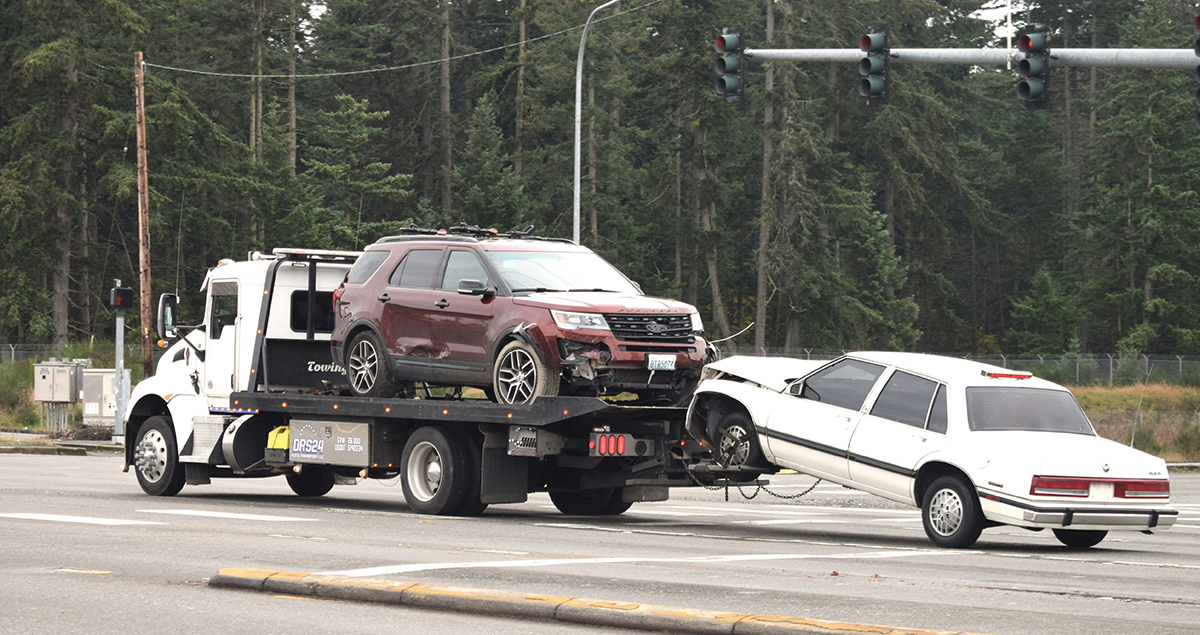
Ottawa mechanics hear a version of the same story regularly. A customer drives in with a problem and mentions that they noticed the first warning signs a few days ago. The mechanic looks at the vehicle and explains that the original issue was manageable, but that driving it for three more days in that condition created a secondary problem that is significantly more expensive. The customer did not realize that driving to the shop rather than calling a tow truck was the decision that doubled the repair bill.
This happens across Ottawa every week. It happens to drivers in Kanata who notice a strange noise and decide to make it to the mechanic on Hazeldean Road before dealing with it properly. It happens to drivers in Orleans who see a warning light and figure the shop on Innes Road is close enough to risk. It happens to drivers in Barrhaven who try to limp a vehicle with a flat tire to the nearest gas station on Strandherd Drive rather than stopping immediately and calling for help.
Knowing when a vehicle should be towed and when it can be driven safely is genuinely useful information that most Ottawa drivers do not have until they learn it the hard way.
The Problems That Always Require a Tow Truck, No Exceptions
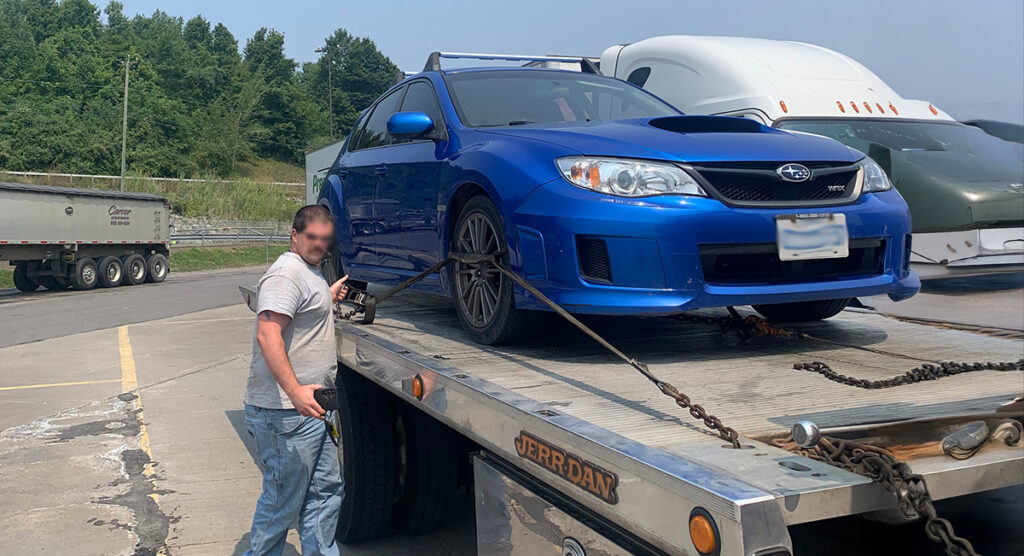
A completely flat tire is the most unambiguous example of a situation that always requires a tow truck rather than continued driving. Many Ottawa drivers believe that driving slowly on a flat tire for a short distance is acceptable. It is not. Even driving three blocks to the nearest gas station on a flat tire destroys the tire’s sidewall, damages the rim, and in many cases causes the brake caliper or rotor to contact the ground or the wheel arch to contact the tire body. The repair cost from driving a short distance on a flat regularly exceeds the cost of the original tire by a significant margin.
Ontario Towing’s drivers see this situation consistently. They arrive at Ottawa breakdown calls and find vehicles with damage that extends well beyond the original flat tire because the driver tried to move the vehicle before calling for help. The phone call takes two minutes. The additional damage takes hundreds of dollars and additional shop time to address.
A red engine temperature warning is the second absolute. When the temperature gauge enters the red zone or a high temperature warning light illuminates, the correct response is to pull over immediately, turn off the engine, and call for a tow truck. Not to take the next exit and then drive to the shop. Not to pull over briefly, let the gauge drop slightly, and then continue driving. Pull over completely, engine off, call for help.
The reason this matters so much is what happens inside an engine that continues operating after the cooling system has failed or the coolant level has dropped critically. The cylinder head warps from the heat. The head gasket fails. In severe cases, the pistons seize in the cylinders and the engine requires complete replacement. The cost difference between pulling over immediately when the red temperature warning appears and driving another kilometer is the difference between a coolant system repair and a five-figure engine replacement.
Brake failure of any meaningful kind belongs in this category as well. If your brake pedal travels to the floor without resistance, if the vehicle pulls violently and uncontrollably to one side under braking, or if you hear metal grinding rather than squealing when the brakes are applied, the vehicle should not move under its own power to a mechanic. Call Ontario Towing and have it transported safely. The risk of further brake failure on a busy Ottawa road like Bank Street, Riverside Drive, or the 417 is not a calculated risk worth taking under any circumstances.
Warning Signs That Require a Judgment Call
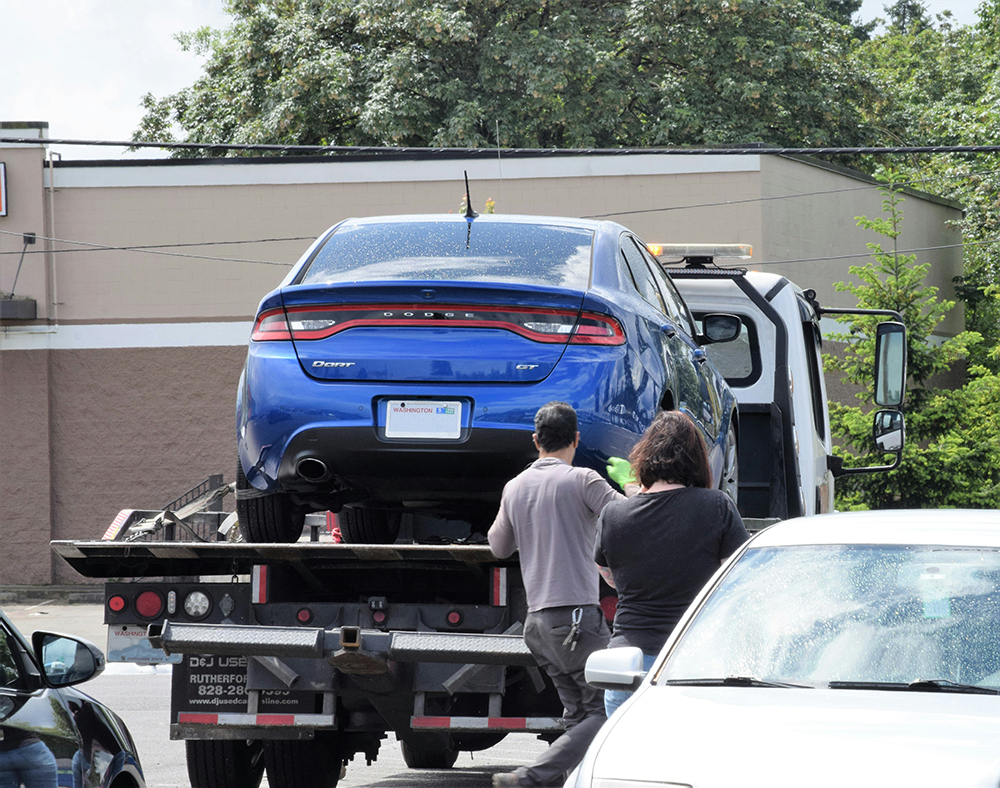
Transmission problems occupy a category where judgment matters, but the default should lean toward calling a tow truck. If your vehicle is slipping out of gear while driving, refusing to engage a gear when shifted, making clunking or banging noises during gear changes, or surging and hesitating in ways that feel mechanical rather than electronic, these are signs that the transmission is in distress. Driving further with a failing transmission risks the kind of catastrophic mechanical failure that converts a repairable transmission into one that needs full replacement.
A transmission replacement on most vehicles in Ottawa costs several thousand dollars. A tow truck call from Ontario Towing costs a fraction of that. The math is straightforward, even before accounting for the safety risk of a transmission failure at speed on the 417 or the 416.
Steering and suspension problems are another category where calling a tow truck is almost always the right answer, even when the vehicle is technically still moving. If your vehicle is pulling severely to one side without correcting, if the steering wheel requires constant active input to maintain a straight line, or if you hear or feel significant clunking, grinding, or popping from the front end during turns or over bumps, these symptoms indicate that the vehicle’s ability to be controlled safely is compromised.
Driving a vehicle with compromised steering through downtown Ottawa traffic, across the Vanier Parkway during rush hour, or on the 417 between Kanata and the core is genuinely dangerous. The vehicle may be moving, but it is not fully under control, and the point at which that partial control becomes no control is unpredictable.
When Driving to the Shop Is Probably Fine
A steady check engine light without any other symptoms, any unusual sounds, or any change in vehicle behavior is generally safe to drive on for a short period to get a diagnostic scan. The keyword is steady. A flashing check engine light is a different situation that indicates an active misfire and requires stopping promptly.
A burned-out exterior light, a minor oil leak that is not rapidly depleting the oil level, a slightly rough idle that has been consistent for some time without getting worse, and a single non-critical warning light are all situations where driving carefully to the nearest Ottawa mechanic is a reasonable decision. Use common sense, keep the trip short, and err on the side of caution if the symptom is new or worsening.
When in doubt, a quick call to Ontario Towing’s dispatch line at (613) 619-4545 can help you think through whether a tow is warranted. Their dispatchers have enough experience with Ottawa breakdown calls to help you assess whether the situation sounds like one that can wait for a short drive or one that needs the vehicle transported. They would rather spend two minutes on that conversation than arrive at a call where the vehicle has additional damage from being driven when it should not have been.
submitted post