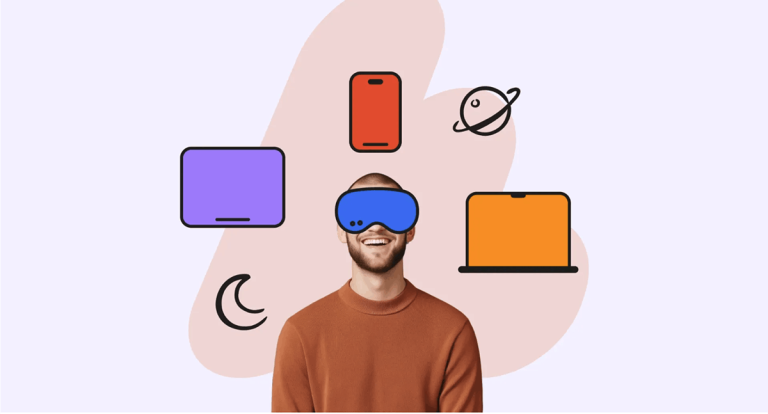
Multi-experience platforms are the standard, not the exception. Consumers engage with their favorite brands across websites, mobile apps, wearables, kiosks, voice assistants, connected cars, and newer, more innovative intermediaries that increasingly connect digital and physical spaces. Therefore, content that was once sent to a solitary destination with a static form must now shift in real-time depending on context, device, and user intention. This unprecedented reality is challenging for traditional CMS platforms since they revolve around page-based publishing that cannot support such nuance. Instead, headless CMS is the ideal solution for multi-experience environments where content can and should be made to flow across many platforms and touchpoints. It’s the architectural component that multi-experience platforms need in order to remain adaptable, scalable, and cohesive as experiences become increasingly more diverse.
Multi-Experience Platforms Need a Single Source of Truth
Multi-experience platforms operate most effectively with a single source of truth for content. When content exists in multiple places or is created bespoke for each experience, errors happen. Messaging gets distorted, updates lag behind, and people get confused about what’s true because it varies from place to place. Headless CMS for a more effective content strategy ensures that structured content is created once and consistently reused across every touchpoint. Headless CMS for seamless marketing integration further strengthens this approach by enabling marketing tools, personalization engines, and analytics platforms to access the same structured content through APIs. Headless CMS offers a solution by operating with one centralized source of content that can be displayed anywhere.
Since a headless CMS separates the creation of content from its visual presentation, there is only one authoritative source on which things are based. If an update needs to be made, it can happen once, and every part of the multi-experience platform will recognize it as true, regardless of channel. This is essential for multi-experience platforms, where the more people engage, the more trust is fostered and trust cannot be fostered if there are discrepancies over time. Ultimately, a single source of truth lowers operating costs and prevents silos from occurring the longer time goes on and the more experiences are added.
Separation of Content From Interfaces Promotes Experience Variety
Multi-experience platforms are all about variety. Each interface or channel has different constraints, different strengths, and different means of engagement. A smartwatch needs brevity; a voice assistant needs conversational simplicity; a web application can have rich screens. CMS are often traditional in that they tie interfaces to content too closely, which requires time and money to adjust as needs change.
Headless CMS completely removes the need for content creation to be tied to an interface at all. Content is served as structured data from which each experience layer can access and interpret in whatever way makes sense. This division of presentation empowers developers and designers of content to create tailored experiences for each channel without having to rewrite or repurpose major portions of content that should already be ready to go. Over time, this becomes even more critical as new interfaces emerge, but separation fosters durability of the content and freedom of experiences that flourish over time.
Structured Content is a Necessity to Orchestrate Experiences
Multi-experience platforms don’t just string together content; they orchestrate experiences by context. Orchestrating experiences requires structured content that is predictable and machine-readable. Headless CMS thrives on structured content models that make meaning, intent, and relationships clear, rather than on vague text fields without structure.
Structured content allows platforms to create cohesive orchestration from pieces, putting together the same pieces in different ways depending on device, location, user actions or the situational moment in the journey. This is important for multi-experience design, where experiences are created through composition and not simply authoring something static. Over time, structured content allows for greater achievement without an exponential increase in complexity as it becomes easier to personalize, automate, and orchestrate cohesively.
Supporting Real-Time and Context-Aware Experiences
Much of a multi-experience platform is in real-time response to context, location, time of day, device status or user action. This means content must be rendered quickly and selectively based on the situation. A headless CMS supports this by delivering content via APIs that can be exposed on demand and cached appropriately.
Since delivery is driven by the API, what’s needed can be requested on the fly. There’s no need to render all possibilities at once or predefine too many pathways to achieve context-aware delivery. This poses a problem for traditional CMS systems that are built for static, rendered pages. They can’t operate as responsively, but headless CMS does not only operate responsively and support real-time considerations, it truly is part of a system that evolves as a component of context.
Consistent Personalization Across Experiences
While personalization is part of the multi-experience platform, without a consistent layer of content through which personalization operates, efforts fragment, and different channels implement their own logic and content variations. This becomes a fragmented approach to personalization, which a headless CMS can correct.
With the ability to create content variants and recognize metadata about those variants in a single space, while allowing differentiation in access systems, personalizations are consistently delivered. They are the same across channels and over time, and a headless CMS allows businesses to support scaled personalization efforts that grow as a whole rather than through siloed opportunities. Multi-experience ecosystems support consistent delivery only when they become increasingly personal, without fragmenting variant-use efforts across channels.
Scaling Experiences Without Scaling Complexity
The big problem with multi-experience platforms is that it’s too easy to scale and introduce complexity that’s hard to manage. New experiences mean new instances of content, new items up for workflow involvement and governance over all aspects can become complicated. But with headless CMS, reuse occurs at the content level while separation occurs at the experiential level.
New opportunities for experiences can go up without bringing a new silo of information; existing information is reused and refit instead of copied. Workflows remain centralized and governance remains the same across the board. Over time, this is a great way to prevent an explosion of complexity because headless CMS makes scaling an easy opportunity without structural concern to make it more complicated.
Aligned Teams Beyond Performance Silos
Multi-experience platforms require collaborative efforts across many teams, from content to design to engineering, product, and regionally-based stakeholders. The more each experience has its content system, the more stakeholders need to align and the greater the coordination overhead. Headless CMS creates a content foundation that teams can rally around, as relevant content models and workflows are shared.
Content teams focus on implementing quality standards to create and curate effective content for reuse. Experience teams focus on the human aspects, from interactions to user interfaces. Engineering teams focus on delivery performance and integration. Clear lines of responsibility reduce friction and enable parallel efforts. Over time, shared content foundations compel collaboration over competition among experienced teams, which is critical for scaling multi-experience initiatives long-term.
Future Readiness for Evolving Experience Types
Multi-experience platforms are not one-and-done solutions. New experience types emerge with time, especially as hardware, AI, and interaction models emerge. Organizations that deploy tightly coupled systems find themselves rebuilding for new interfaces; those who implement headless systems gain future-ready content systems.
Because the content is decoupled from delivery and experiences but logically structured, new experience types can access already-existing content with different delivery logic without requiring an overhaul. Delivery logic emerges and changes, but content stays the same. This future readiness protects the investment in established content and limits the costs of innovation. Over time, headless systems ensure that multi-experience platforms get the chance to grow as technology advances and are not held back or forced to rebuild because of past decisions on architecture.
Governance Support Across a Fragmented Ecosystem
As more experiences emerge, better governance becomes necessary. Content governance supports content quality, compliance, consistency, and reduction of expectations through equity. Headless content systems support scalable governance by implementing structure, workflows, and permissions at the content layer, rather than granting access to a single experience within a siloed architecture.
Since governance happens with a centralized approach across touchpoints, even if delivery mechanisms differ, content approvals, versioning, and auditing are consistent across the more fragmented they become. Risk and operational overhead are reduced. Over time, governance becomes enabled instead of enforced thanks to headless systems. Fragmented experiences don’t need to fear governance if they have content resources that won’t stifle innovation.
Content as a Platform Capability
In multi-experience ecosystems, content is more than an enabling asset; it’s a platform capability. Experiences succeed or fail based on how well content matures to context and end user. Headless CMS transforms content into this strategic realm through reusability, measurability, and adaptability.
When organizations leverage content as a platform service instead of a page artifact, the experience design options are endless. Content is the impetus for experimentation, personalization, and even channel expansion. Over time, this becomes a new reality where a content infrastructure becomes a revenue generating engine instead of an operating expense. Organizations with headless CMS need to do this because they’re making their content act like the same level of sophistication as the platforms they support.
Experience-Led Innovation Without Need for Content
Multi-experience platforms are born from experimentation and innovation; however, often, innovation hits a wall when the content systems cannot keep pace. In coupled environments, launching a new experience often means rewriting content, creating new workflows or backtracking to find an acceptable workaround. Headless CMS eliminates this friction by providing experienced teams with the opportunity to innovate without the need to change the content layer. Existing content can still be reused and kept on its own without any changes to how it’s consumed.
This decoupled environment fosters experimentation since the financial implications of trying something are lessened. Teams can prototype new experiences based on existing content, adjust delivery logic, and take ownership of processes without impacting existing workflows. This becomes status quo over time as innovation no longer becomes an event; instead it becomes a regular occurrence facilitated by headless CMSs ability to ensure that creativity and experimentation can scale concurrently with the platform instead of being limited by what content infrastructure can provide.
Supporting Experience Orchestration Across Touchpoints
Multi-experience platforms demand greater orchestration of journeys than single interactions. Users often shift between devices, contexts and applications, meaning that content needs to facilitate and complement them, rather than duplicate efforts. Headless CMS supports such need for orchestration through centralized content that’s shareable across touchpoints.
Since content is centralized and structured, orchestration systems can leverage similar content pieces, or even the exact same content, across many experiences. Thus messaging is consistent, if the same context is needed, that context is able to transition. Over time, this experience facilitates user satisfaction and brand integrity. Headless CMS is the content layer that allows for such interconnected, channel-spanning experience to operate without treating each interaction as standalone.
Minimizing Technical Debt as Experience Types Increase
Technical debt is a real concern for organizations that increase experience types. Every new interface is another opportunity for custom logic, reusing, duplicating content or creating one-off integrations if the proper structure is not in place to contain it. Headless CMS minimizes technical debt by promoting reuse and separation of concerns from the very beginning.
Organizations do not create channel-exclusive content systems, but instead have a collective, API-driven content layer. This eliminates redundancy and eases maintenance down the line as experience systems grow. Over time, technical debt grows more slowly because new experiences use what’s already available rather than adding new materials. Headless CMS ensures that as more types of experiences are established across the enterprise, that technical debt does not proliferate like it normally would.
Establishing a Sustainable Foundation for Experience Governance
As multi-experience platforms mature, governance can become increasingly complicated. Different teams, regions and products may have nuanced requirements but governance needs to enforce consistency, compliance and quality of experiences nonetheless. Headless CMS lends itself to sustainable governance since it retains control over the content but allows the experience layer freedom.
From content structure to approval and content lifecycle status, all gets enforced once and applied everywhere. Experienced teams can innovate with freedom without governance black holes. Over time, this balance facilitates expansion of platforms through responsible scaling. Headless CMS enables multi-experience platforms to not only champion governance but also facilitate it in a way that makes operational sense over time.
Other articles from totimes.ca – otttimes.ca – mtltimes.ca