
The way Ottawa residents watch television has changed more in the past three years than in the previous two decades. What used to be a straightforward choice between Rogers, Bell, or Videotron has fragmented into a sprawling landscape of streaming services, cable alternatives, and internet-based options that can leave even tech-savvy Ottawans wondering which combination actually makes sense for their household. Whether you’re a Kanata family cutting the cord for the first time, a downtown apartment dweller trying to decide between Netflix and Crave, or a Gatineau viewer looking for French-language content, understanding the current Ottawa TV streaming landscape has become a practical necessity rather than a nice-to-know.
This guide covers the legitimate TV streaming services available to Ottawa residents in 2026, how they compare on price and content, and what to consider when choosing between them.
The State of Ottawa Television in 2026
Ottawa’s television market reflects broader Canadian trends but with some regional specifics worth understanding.
Traditional cable and satellite still dominate a substantial share of Ottawa households, though the trajectory is clearly downward. Rogers Ignite TV remains the largest provider across the Ottawa area, followed by Bell’s Fibe TV in most neighbourhoods where fibre-to-the-home is available. For satellite options, Bell Satellite TV and Shaw Direct still serve rural areas around the National Capital Region where fibre and cable haven’t reached. Traditional cable bundle pricing in Ottawa currently ranges from CAD$100 to CAD$180 per month, depending on channel packages and internet bundling.
Streaming services have essentially universal penetration in Ottawa. Nearly every household with reliable internet maintains at least one, and most maintain three or more. The specific service mix varies substantially by household demographics and viewing patterns.
Alternative live TV options delivered over the internet have grown steadily as awareness spreads and the quality of legitimate providers has improved. Ottawa’s mature broadband infrastructure — average speeds in the city now comfortably exceed 100 Mbps in most neighbourhoods — makes internet-based television alternatives genuinely practical rather than compromise choices.
The Major Streaming Services Ottawa Households Use
Let’s walk through the actual options available to Ottawa residents, starting with the streaming services that dominate most households.
Netflix Canada remains the anchor subscription for most Ottawa homes. Current pricing tiers in Canada sit at CAD$7.99 for the ad-supported basic plan, CAD$18.99 for the standard plan, and CAD$23.99 for premium (which supports 4K streaming and simultaneous streams). Netflix’s Canadian catalogue overlaps substantially with the American library but with some notable gaps, particularly around HBO content and current-season network television.
Amazon Prime Video comes bundled with Amazon Prime membership at CAD$99 annually, which effectively makes the video service marginal-cost from a household budget perspective. Content includes Amazon original programming, a rotating catalogue of licensed films and series, and add-on subscriptions for services like Paramount+ or MGM+ through the Prime Video Channels feature.
Disney+ at CAD$11.99 monthly or CAD$119.99 annually anchors households with children and Marvel or Star Wars fans. The Star general-entertainment tier expanded the catalogue significantly and made Disney+ more relevant to households without kids, though the pricing for that tier remains bundled with the standard subscription.
Crave is the Canadian home for HBO content and a broad catalogue of Canadian film and television. Crave costs CAD$9.99 for the basic streaming tier or CAD$22 monthly for the Movies + HBO tier that includes premium content. For households that want The Last of Us, Succession, House of the Dragon, and Canadian original programming, Crave has become essentially unavoidable.
Apple TV+ at CAD$8.99 monthly maintains a smaller but engaged Canadian subscriber base focused on prestige originals like Ted Lasso, Slow Horses, Severance, and Silo. Adoption is often tied to Apple device ownership through Apple One bundles.
Paramount+ at CAD$9.99 monthly has grown in Canadian households through Star Trek content, Yellowstone spinoffs, and NFL coverage. Canadian availability launched in 2022 and content depth has expanded steadily.
CBC Gem offers both a free ad-supported tier and a CAD$4.99 premium tier with substantial Canadian original content, live news coverage, and sports programming. For Ottawa households wanting to prioritize Canadian content or access CBC’s news coverage, CBC Gem is a legitimate primary option.
YouTube Premium at CAD$13.99 monthly (CAD$23.99 for family plans) has become a genuine competitor for entertainment spending among younger Ottawa households who consume substantial YouTube content.
Illico and Videotron’s Helix serve the francophone market with substantial French-language original programming and Quebec-produced content that other services don’t prioritize.
Sports Streaming Options for Ottawa Fans
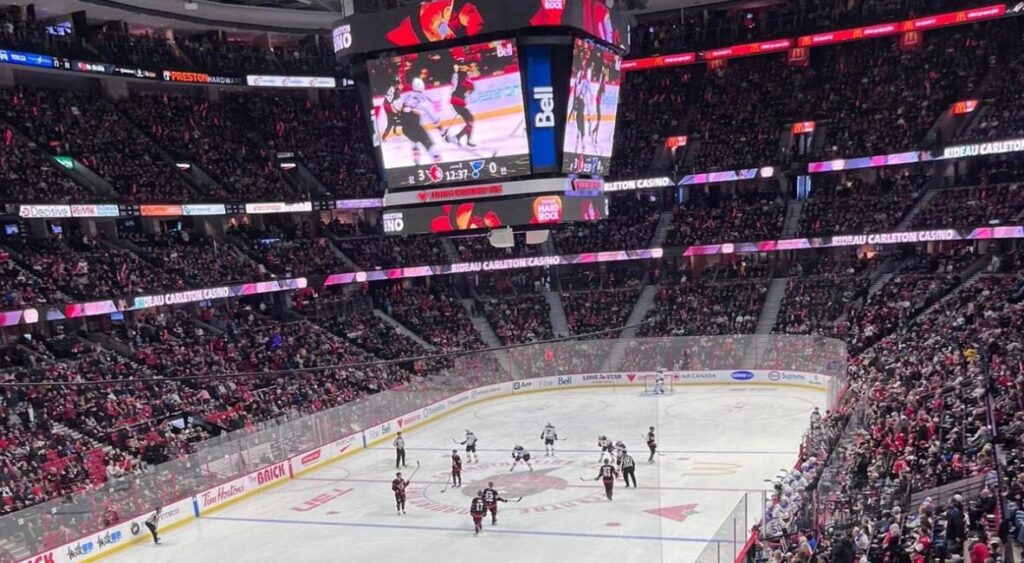
Ottawa is a serious sports town — the Senators, the REDBLACKS, the 67’s, Atlético and general Canadian hockey and CFL interest all drive significant streaming service decisions.
Sportsnet +(formerly known as Sportsnet NOW) ranges from $29.99 to $42.99 per month, or $249.99 to $324.99 per year, depending on the tier you choose. It covers most NHL games including the Senators regional broadcasts, MLB (including Blue Jays), NBA, and various other content. For Ottawa hockey fans, this is often the essential subscription that keeps them from being able to fully cut the cord.
TSN at CAD$29.99 plus tax monthly covers CFL (including REDBLACKS games), NFL, NBA, tennis, and various other sports content. TSN also carries substantial Senators content depending on the season.
NHL Centre Ice offers out-of-market coverage for hockey fans who want to follow teams other than the Senators — priced at around $139.00 to $219.00 per season when purchased as a standalone package, or it can be bundled into a monthly sports package depending on your television provider.
NBA League Pass, NFL Sunday Ticket (via YouTube TV in the US, more complex to access in Canada), and various sport-specific packages complete the direct-to-consumer sports streaming landscape.
The reality for Ottawa sports fans is that comprehensive sports coverage through streaming alone often ends up costing nearly as much as traditional cable — Sportsnet+ plus TSN alone approaches CAD$55 monthly, before adding any regular streaming services.
Internet-Based Live TV Alternatives
For Ottawa households looking to break away from Rogers or Bell without giving up comprehensive live TV access, a newer generation of internet-based live TV services has emerged as one of the practical alternatives worth serious consideration. If you want a broader overview of the options available across Canada beyond just the Ottawa market, you can click here for infos about television in Canada — it covers the full picture of what modern Canadian live TV streaming services offer.
These services deliver live TV channels through your standard broadband connection rather than through a proprietary cable network. The technology is functionally identical to what CBC Gem, Netflix, or Crave already use — just applied to a broader lineup of live channels. Setup takes about fifteen minutes end to end, works on any modern smart TV or streaming device, and eliminates the need for cable boxes or engineer installation visits.
Quality Canadian-focused live TV streaming services in 2026 offer full coverage of the domestic broadcast lineup — CBC and Radio-Canada, CTV network, Global, Citytv, plus the range of specialty channels (Discovery Canada, Sportsnet, TSN, RDS for French Canadian sports, and more). The bilingual English-French capability matters substantially for Ottawa given the National Capital Region’s substantial francophone population across the river in Gatineau.
Beyond the Canadian channel coverage, quality live TV streaming services in 2026 also include direct access to American networks (NBC, CBS, ABC, FOX, PBS), premium sports coverage (ESPN, Fox Sports, NBC Sports Network), international channels from across Europe, South Asia, the Middle East, and East Asia, and video-on-demand libraries running to 80,000+ films and series.
Pricing for legitimate Canadian live TV streaming services in 2026 typically ranges from CAD$10 to CAD$25 per month, with annual subscriptions working out to CAD$4-CAD$10 effective monthly rates. Compared to CAD$60-CAD$100 for the television component of a Rogers Ignite or Bell Fibe bundle, the annual savings for Ottawa households making the switch typically range from CAD$700 to CAD$1,200.
What About Legality?
This is the question every prospective user asks, and the honest answer requires some nuance.
The technology behind these live TV streaming services is fully legal in Canada. There’s no legal restriction on watching live television through your internet connection — that’s the same fundamental delivery method used by CBC Gem, Crave, Netflix, and every other streaming service. What matters legally is whether the specific provider holds the proper content licences for the channels they distribute.
Canadian enforcement, conducted primarily through Bell, Rogers, and the CRTC’s regulatory framework, has focused historically on providers and resellers operating without licences rather than on individual viewers. End-user prosecutions are essentially unheard of in Canadian legal history. That doesn’t mean the legal landscape has zero grey areas, but the practical risk profile for consumers using properly operating live TV streaming services is very low.
The markers of a legitimate operator are consistent across countries. Visible business identity with proper contact information. Standard payment methods (credit cards, PayPal, sometimes Interac) rather than cryptocurrency-only. Realistic pricing that doesn’t dramatically undercut sustainable rates. Free trials or money-back guarantees that let prospective customers verify the service works before committing money. Real customer support that responds in reasonable timeframes and in the language customers need.
Choosing the Right Setup for Your Ottawa Household
For Ottawa households evaluating what streaming and cable arrangement makes sense, the practical process involves a few concrete steps.
Start with an audit of what you actually watch. Not what you’re paying for, but what you actually consume in a typical week. The 15-20 channels or streaming services that get meaningful use. Ottawa Senators games. REDBLACKS. Whatever local news you rely on. Kids’ programming if that matters. The specific streaming shows currently in rotation.
Assess your household’s device situation. Modern smart TVs (any model from about 2018 onward) work with essentially any streaming service. Older TVs need something like an Amazon Fire TV Stick (around CAD$70) or an Apple TV to become fully streaming-capable. Most Ottawa households already have adequate hardware without needing new purchases.
Consider the broadband situation. Ottawa has excellent broadband coverage through Bell Fibe, Rogers cable, and independent providers like TekSavvy. For high-quality streaming, aim for at least 100 Mbps download speed — most Ottawa broadband plans easily exceed this. Wired Ethernet between your router and streaming device is more stable than WiFi, particularly during peak evening hours.
Test alternatives before committing. Any legitimate streaming service offers a way to trial the experience. Use it. Test during peak viewing hours. Verify that the content you actually care about is present, reliable, and in the quality you want.
Do the arithmetic. Add up what you’re currently paying across cable, streaming services, and any other video subscriptions. Compare it to what a modified arrangement (fewer services, cable replacement, a different combination, whatever) would cost. The gap is often surprising and represents real savings for Ottawa households willing to make the changes.
Common Ottawa Household Configurations
Based on what’s actually working for Ottawa households in 2026, a few common patterns have emerged.
The traditional bundle household maintains a Rogers Ignite TV or Bell Fibe subscription (approx. CAD$100-CAD$180 monthly) plus Netflix, Prime, and Disney+, for total monthly spending in the approx. CAD$140-CAD$220 range. This pattern is declining but remains substantial, particularly among older Ottawa demographics.
The mixed streaming household has cut cable but maintains Netflix, Disney+, Crave, Prime, and often Apple TV+ or Paramount+. Monthly video spending sits in the approx. CAD$60-CAD$90 range. This is currently the most common pattern in downtown Ottawa and Gatineau.
The live-TV-streaming household has replaced cable with an internet-based live TV service (approx. CAD$10-CAD$25 monthly) plus Netflix and one or two other streaming services, for total monthly spending in the approx. CAD$40-CAD$70 range. This pattern is growing rapidly across all Ottawa demographics as awareness spreads.
The sports-focused household maintains Sportsnet+ plus TSN, plus Netflix plus Crave, for approx. CAD$60-CAD$90 monthly. This works for households whose primary television priority is sports without the traditional cable bundle.
The minimalist household relies on Prime (as effectively a shipping subscription with video included), CBC Gem’s free tier, and YouTube. Monthly video spending sits below CAD$20. This works well for households that don’t need extensive live sports or premium original programming.
Looking Ahead
The Ottawa streaming landscape will continue to evolve through the rest of 2026 and beyond. Several trends worth watching.
Traditional cable continues to decline. Rogers, Bell, and their smaller regional competitors could likely continue losing traditional television subscribers as more households complete existing contracts and refuse to renew.
Streaming service consolidation is likely. The proliferation of standalone services that characterized 2020-2024 may reverse somewhat, with bundling deals, merger activity, and content licensing consolidation reducing the total number of separate subscriptions households consider.
Internet-based live TV adoption will continue growing. As awareness spreads, service quality improves, and the economics remain dramatically favorable compared to traditional providers, mainstream Ottawa households will continue moving in this direction.
Local content becomes increasingly important. For Ottawa specifically, the ability to access CBC and CTV local news, Senators coverage, REDBLACKS games, and francophone content from across the river in Gatineau will remain distinguishing factors between service options.
The Practical Bottom Line
For Ottawa residents evaluating their television and streaming setup in 2026, the landscape has become both more complex and more consumer-friendly than it was five years ago. More options exist. More alternatives to traditional cable are legitimate and cost-effective. More flexibility exists for households to build the specific arrangement that matches their actual viewing patterns.
The households navigating this well share a few common approaches. They audit what they actually watch rather than what they’re paying for. They test alternatives before committing to major changes. They match their content choices to their household patterns rather than defaulting to whatever the cable company offers. And they update their arrangements periodically as their needs and the available options both evolve.
For an Ottawa household paying approx. CAD$180 monthly for a traditional Rogers or Bell bundle and adding streaming services on top, the potential for restructuring toward something better — cheaper, more flexible, more aligned with actual viewing — is substantial. Whether that means keeping the cable and dropping a few streamers, cutting cable entirely and moving to streaming-only, or exploring internet-based live TV as a cable replacement, the choice is genuinely up to each household.
The quiet consumer revolution in how Ottawa watches TV is well underway. And the households that engage with it thoughtfully typically end up watching more of what they actually want, at meaningfully lower cost, with less friction and more control over their content decisions than the traditional cable-plus-streaming arrangement ever offered.
That’s the Ottawa streaming landscape in 2026, in all its complexity and possibility.
This article is a submitted guest post, and all prices mentioned are subject to change